
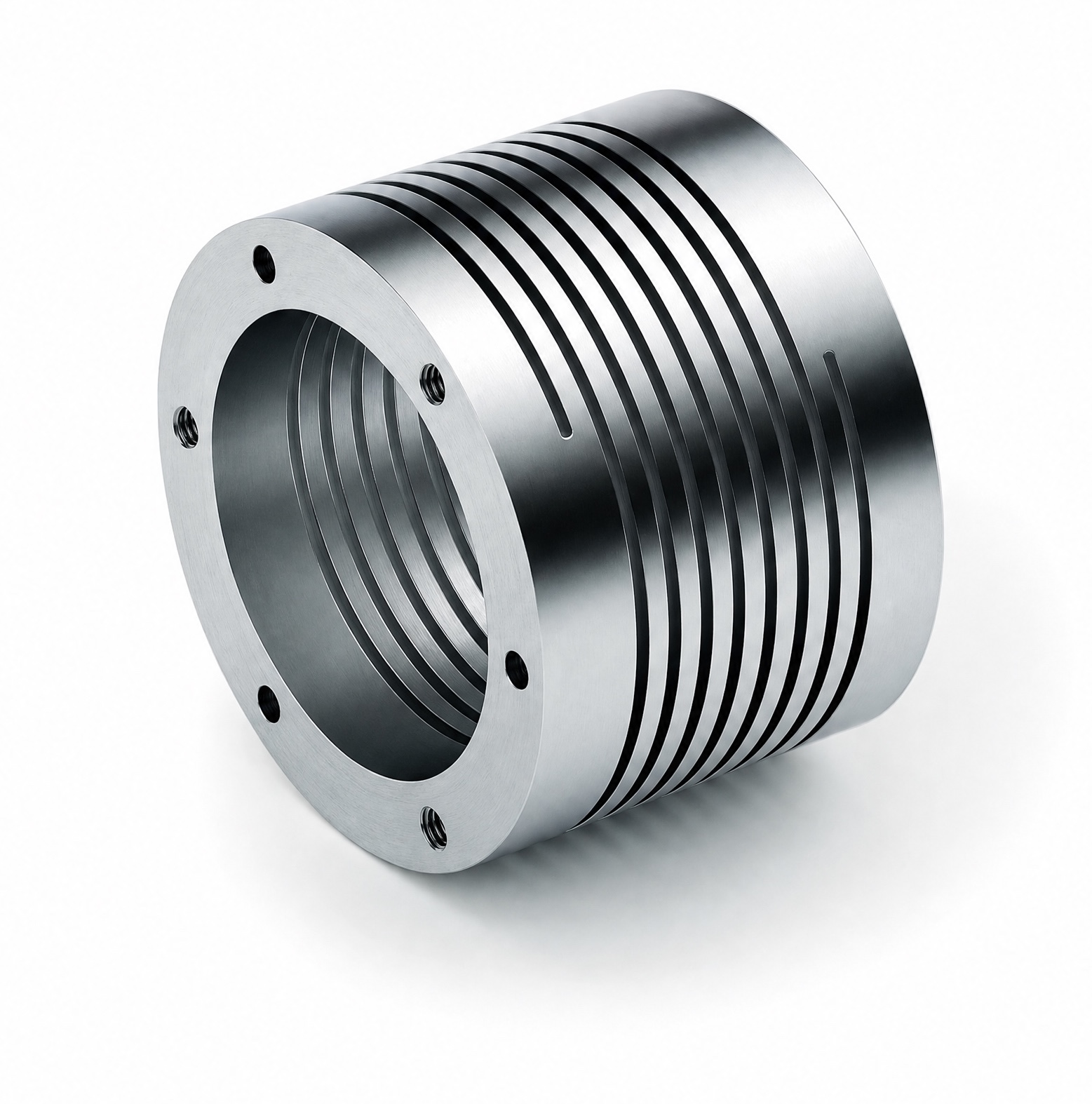
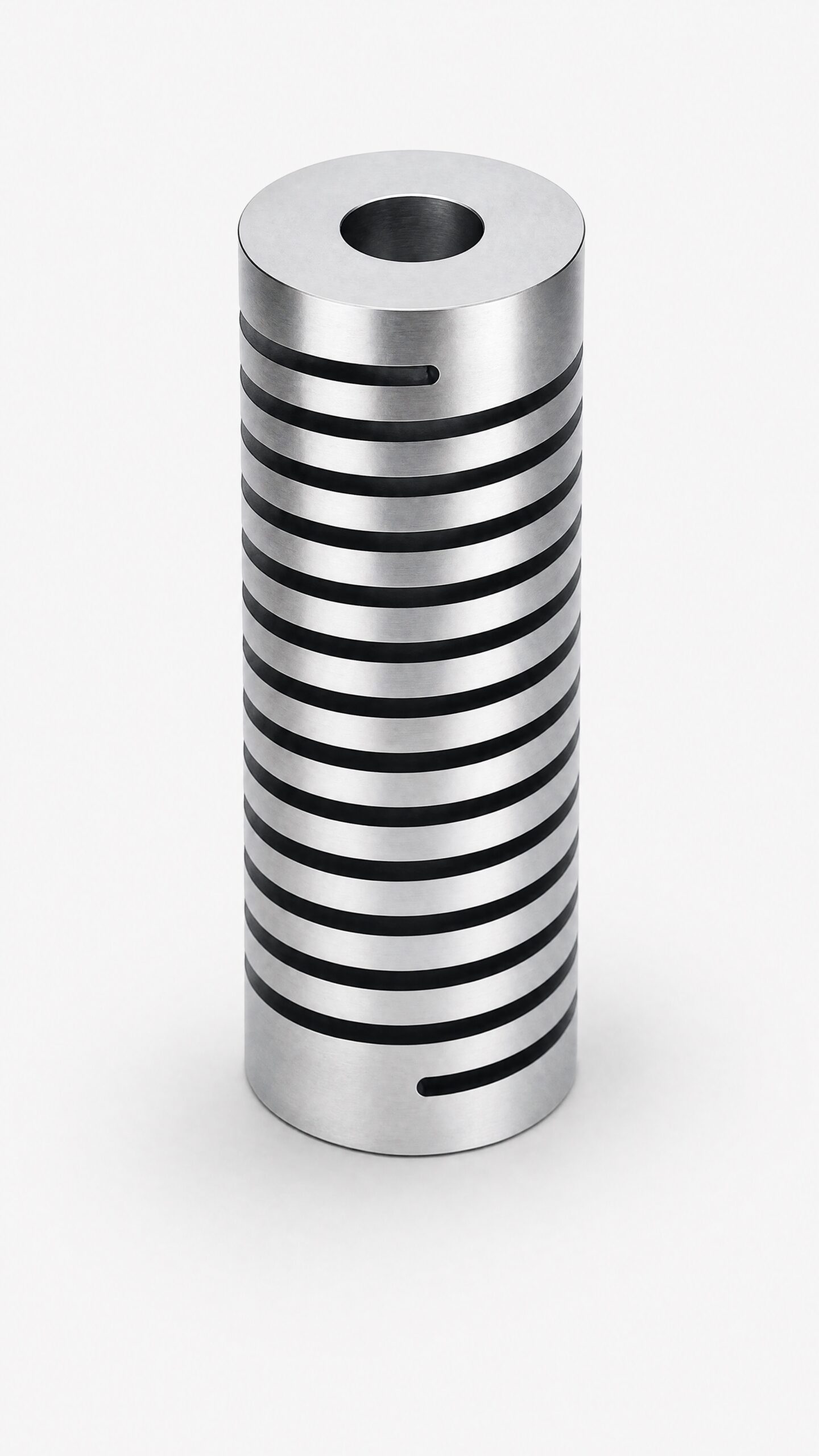
Machined springs are precision elastic components manufactured from solid metal/non-metal materials through advanced CNC machining processes.
Accuracy up to ±0.1%
Compression, tension and torsion
Threaded pin, dowel holes, slots…
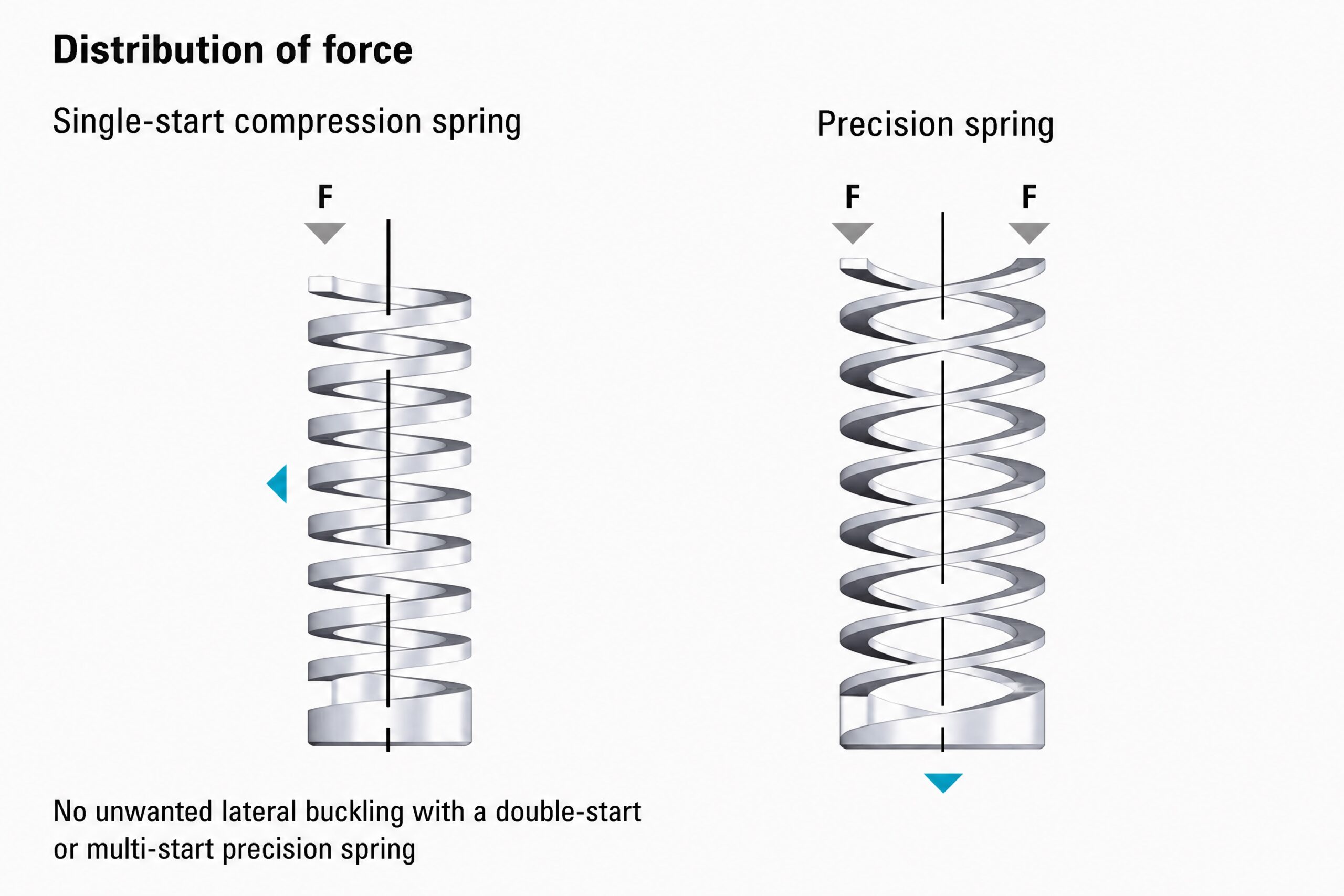
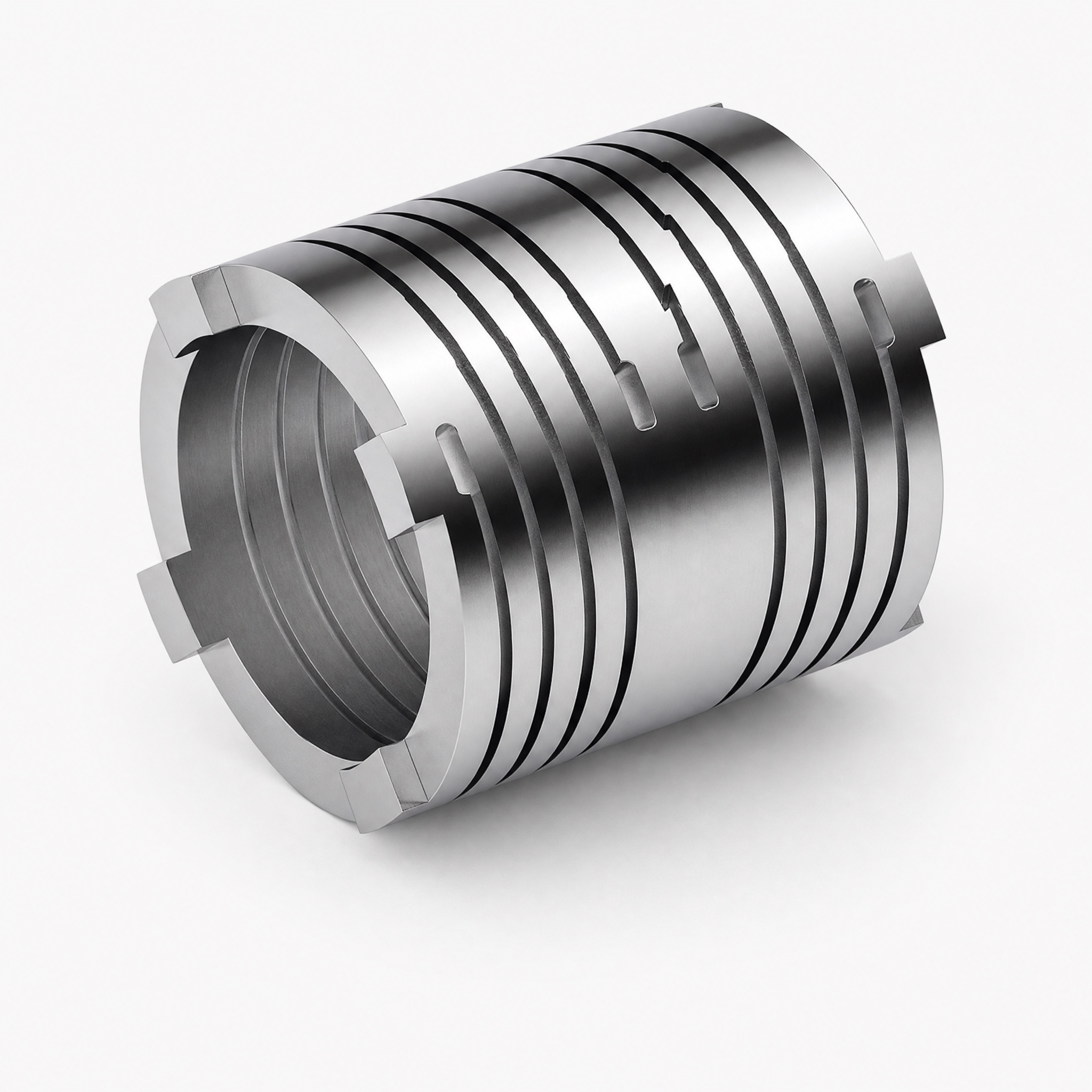
In traditional wire-wound springs and single-start machined springs, any force exerted on these springs acts via only a single point and results in overturning, causing the spring to buckle under load. This can lead to rapid spring breakage.
In multi-start machined springs, the pressure is distributed across multiple points, which results in an even parallel distribution of force to the centreline of the spring. The greater thenumber of starts, the more precisely the parallelism is converted on compression or extension.
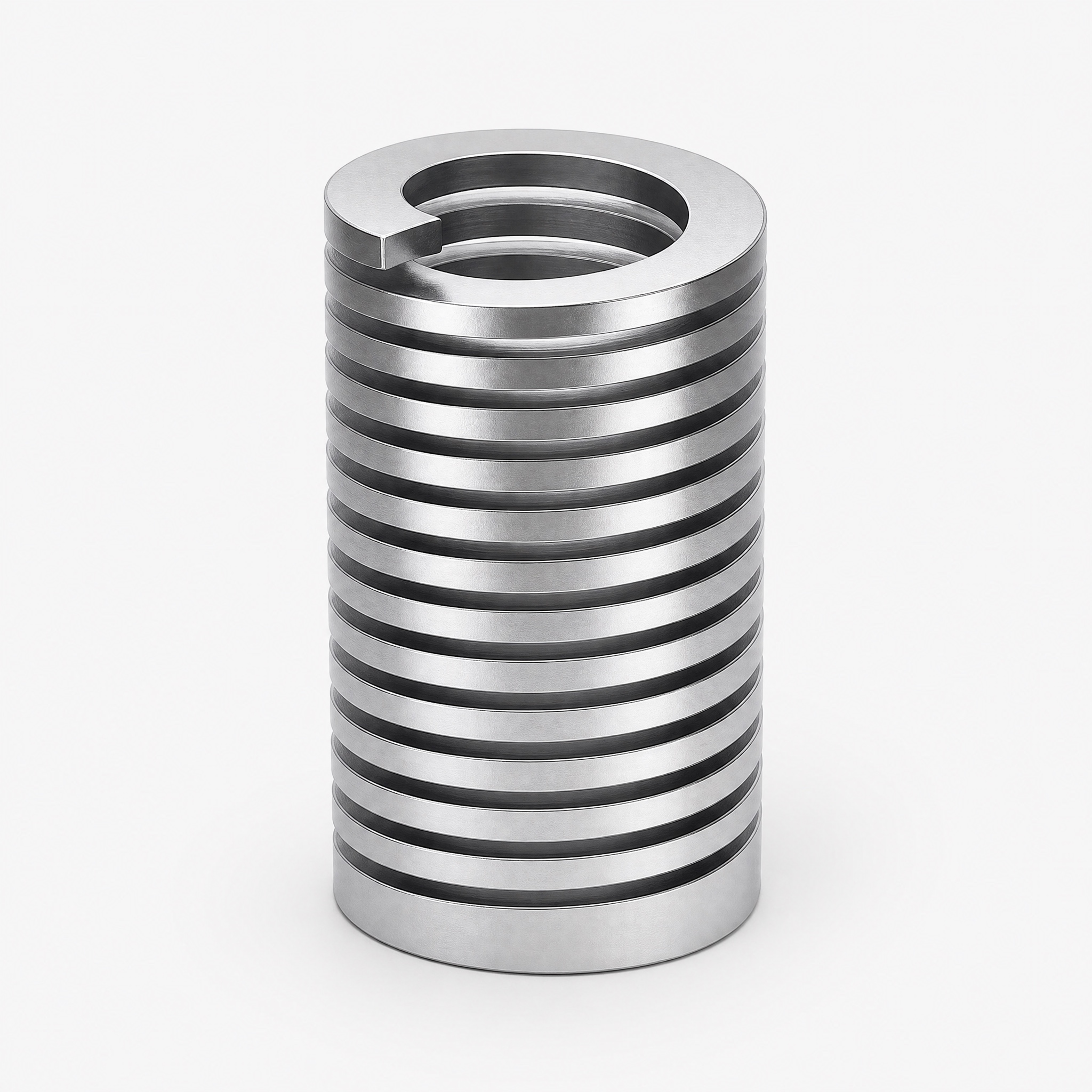
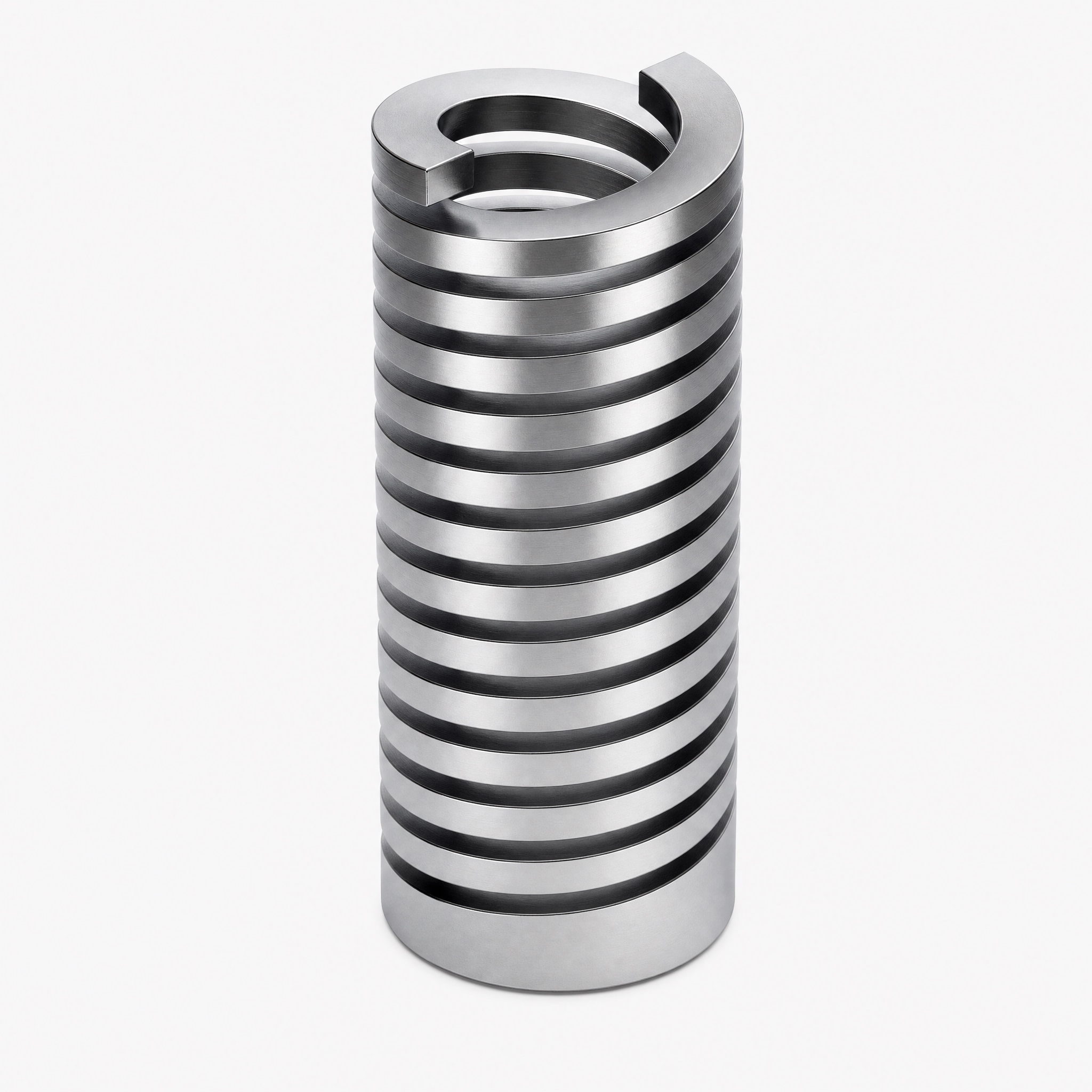
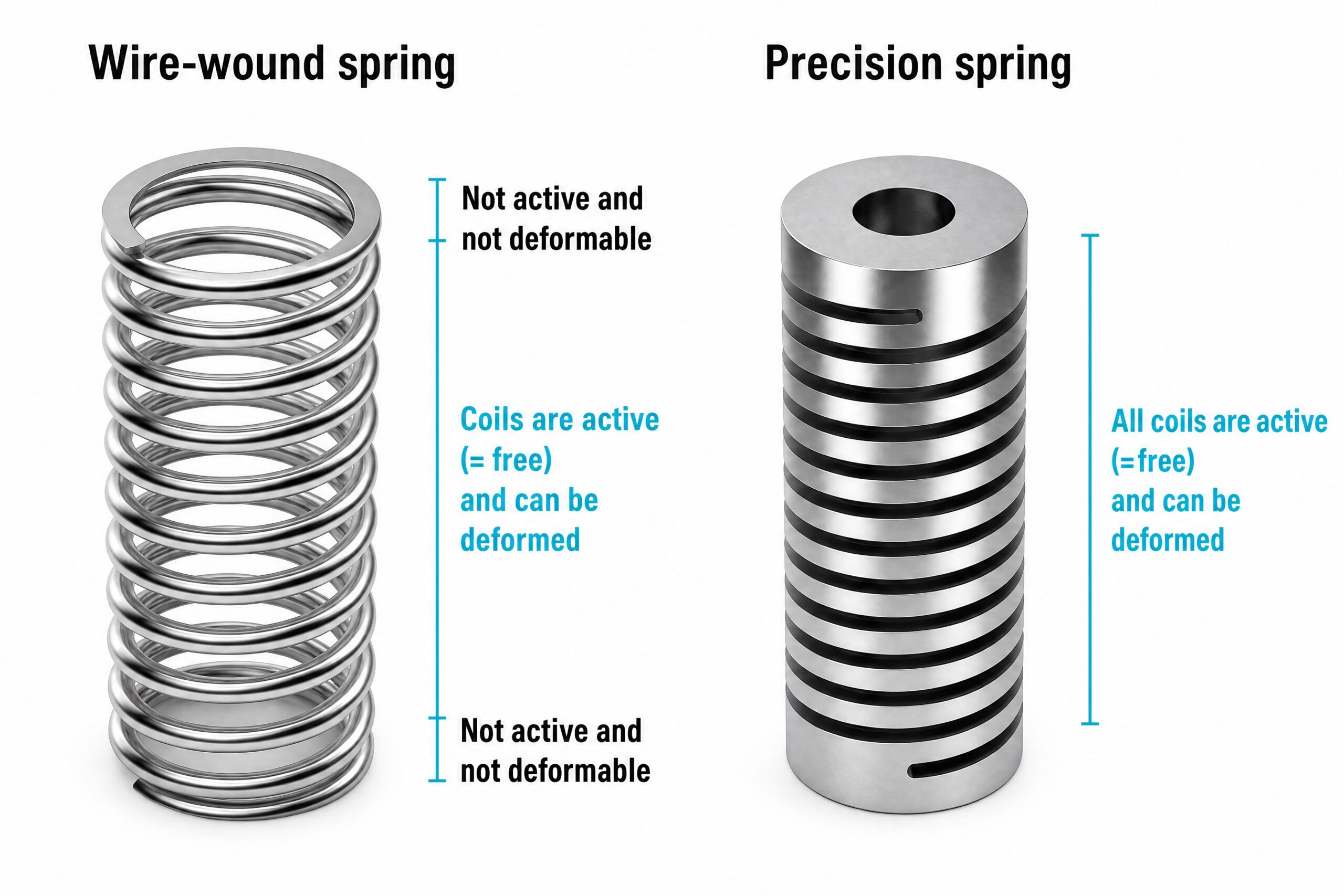
The spring rate of a traditional wire-wound spring is within a tolerance range of ± 10%. Precision machined springs, on the other hand, have a tolerance range of ± 5% and can be manufactured for specific applications with a tolerance of ± 1%. It is worth mentioning that we have successfully developed a precision machined spring with a spring stiffness tolerance of ±0.1% for a project.
In the initial phase of distortion, the wire-wound spring does not exhibit a linear spring characteristic curve due to the half inactive winding at the ends of the spring. To ensure a linear distribution of force, the compression spring must be pre-stressed.
The precision spring exhibits a linear spring characteristic curve because all coils can move freely.
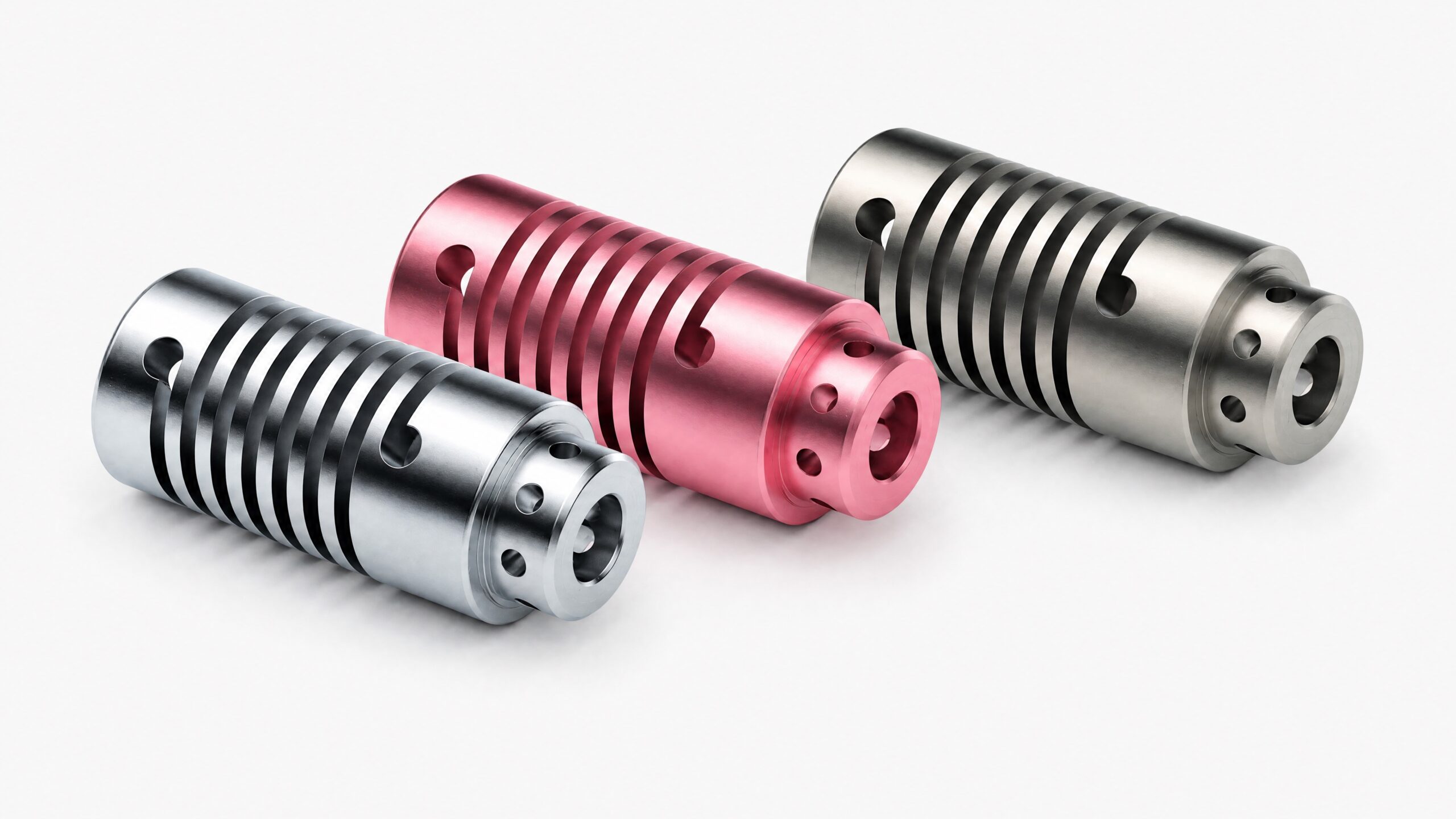
Machined springs are not restricted to conventional spring wire materials.
Any machinable material can be utilized, enabling lightweight, corrosion-resistant, non-magnetic, or electrically insulated spring solutions for advanced engineering applications.
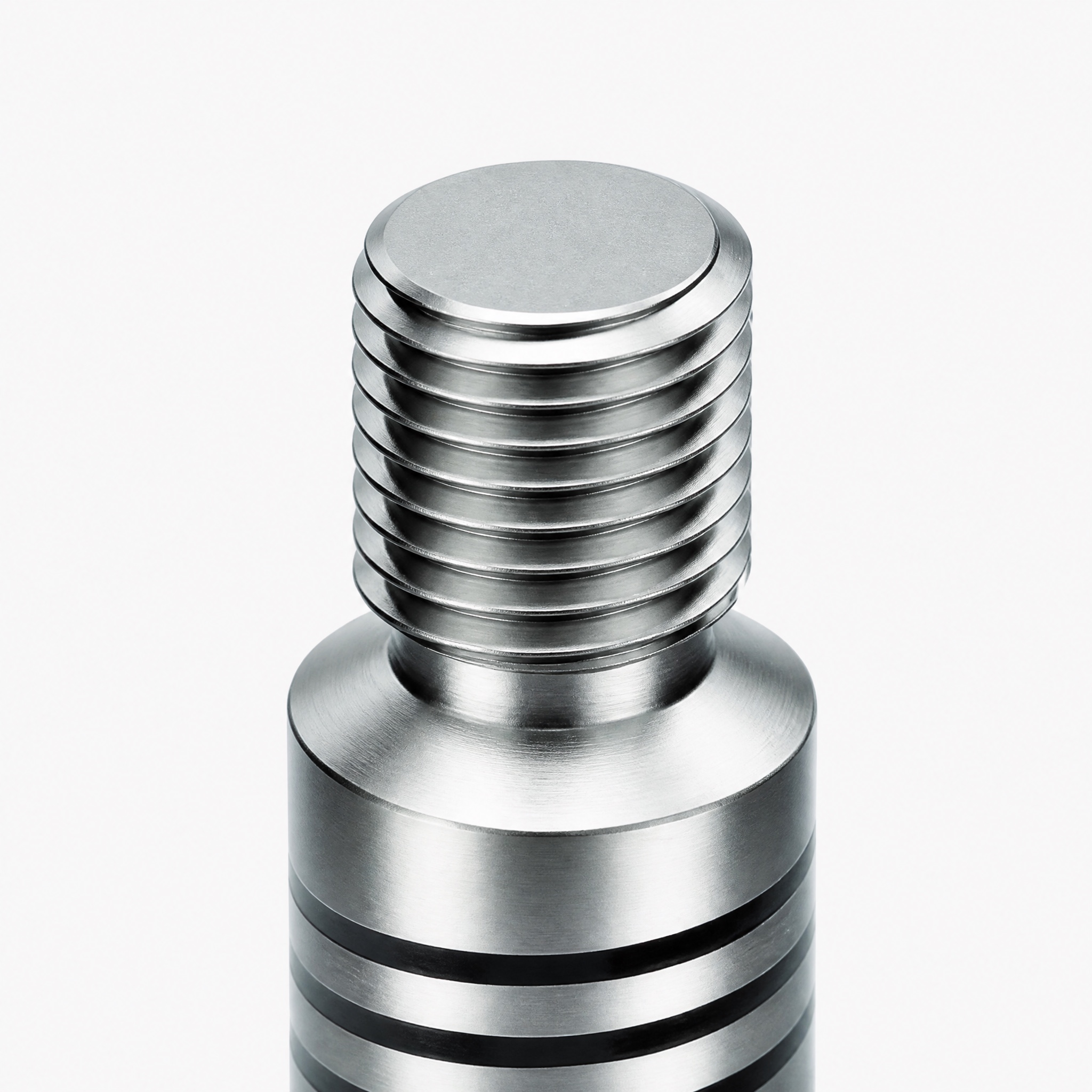
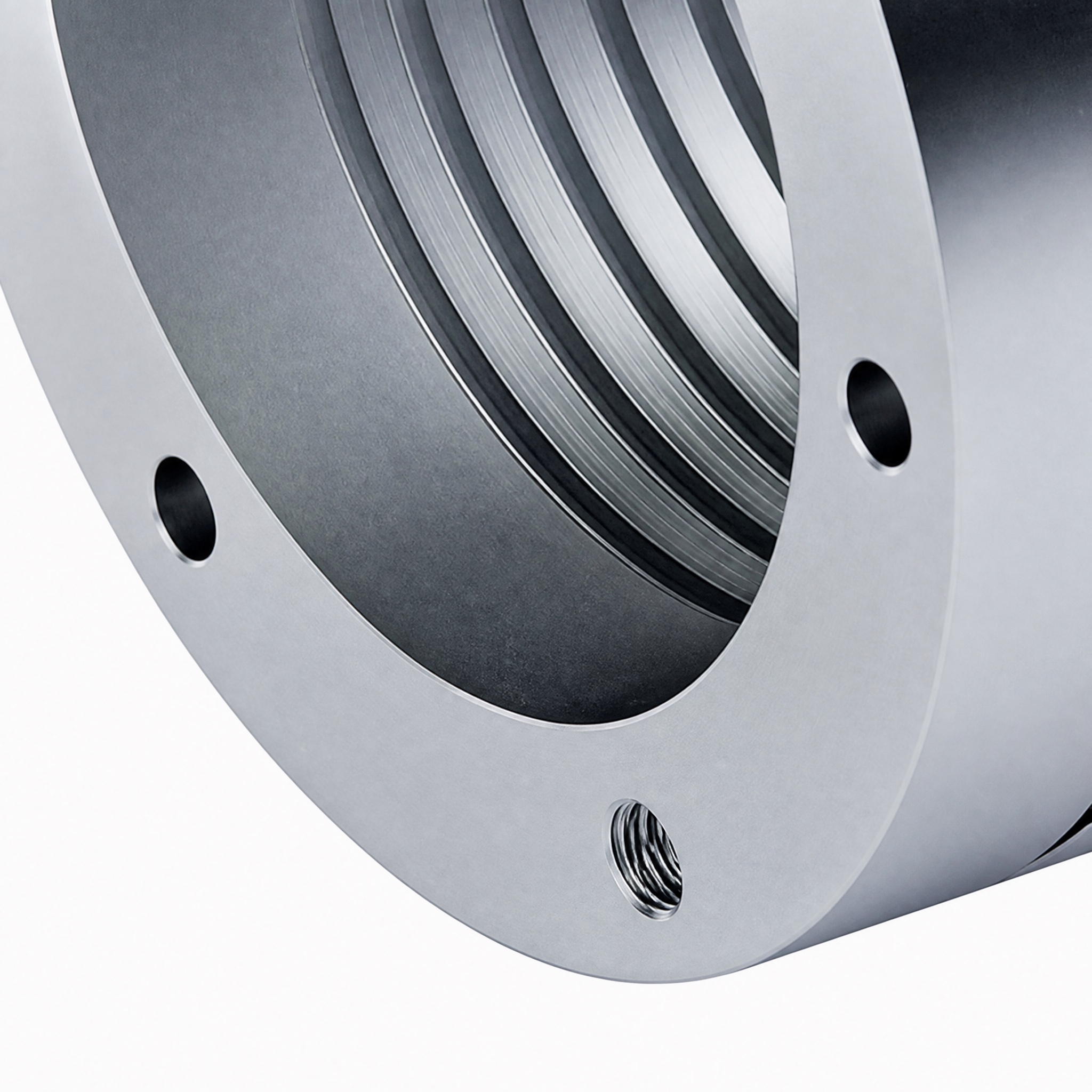
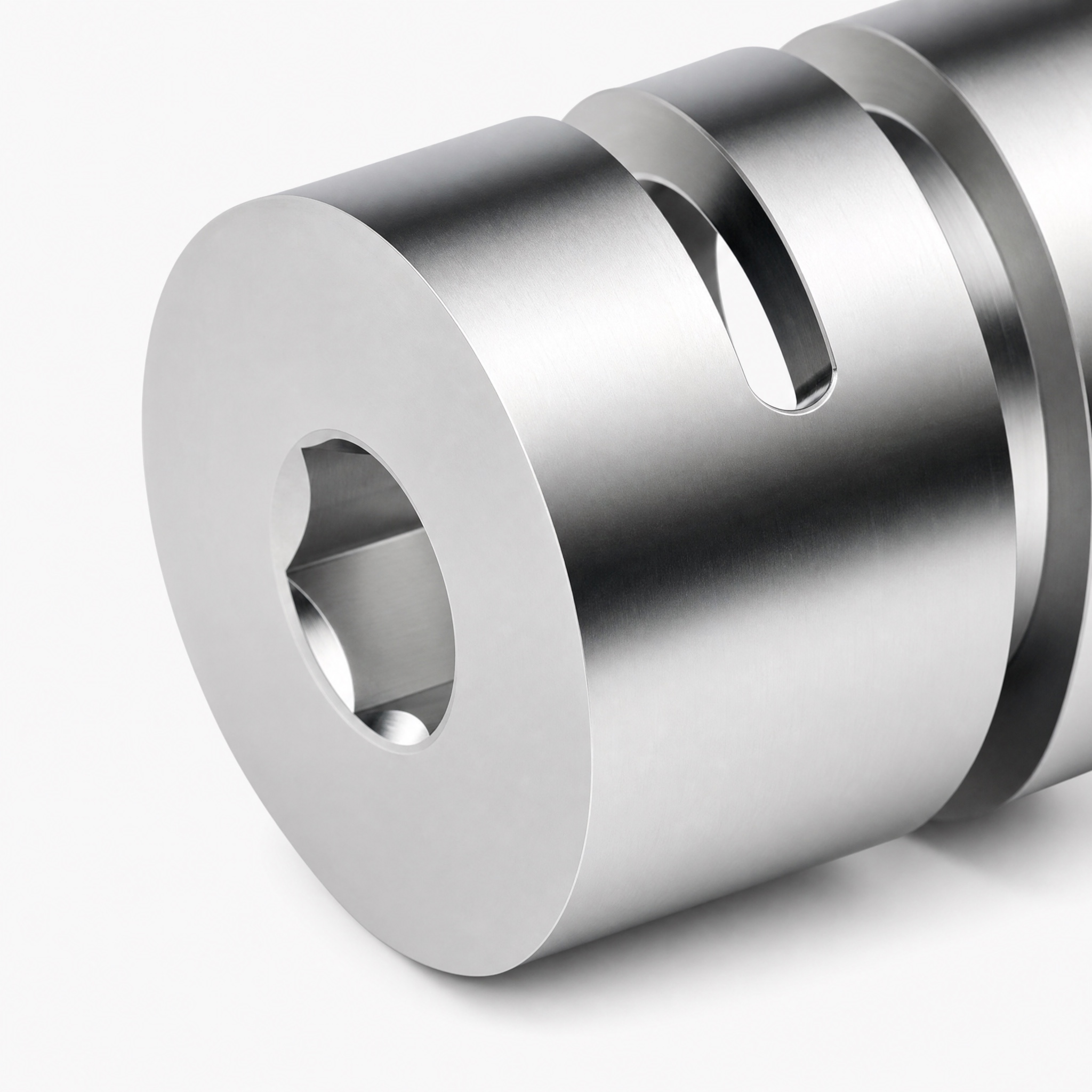
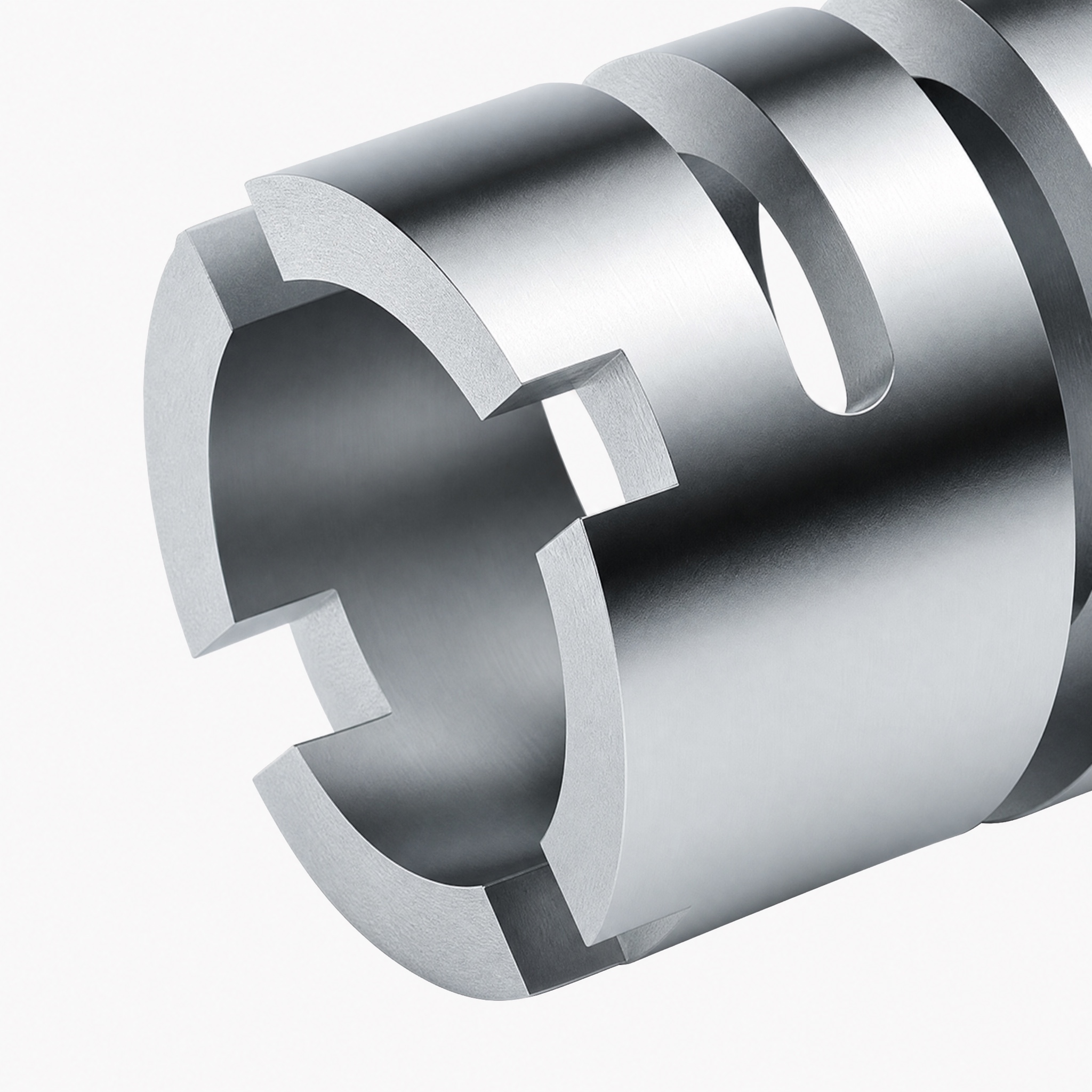
Traditional wire springs rely on hooks, loops, or bent wire ends for attachment, which can create stress concentration and unstable torsional loading.
Machined springs integrate robust connection features such as pins, slots, flanges, and cross recesses directly into the structure, improving load transmission, service life, and installation efficiency.
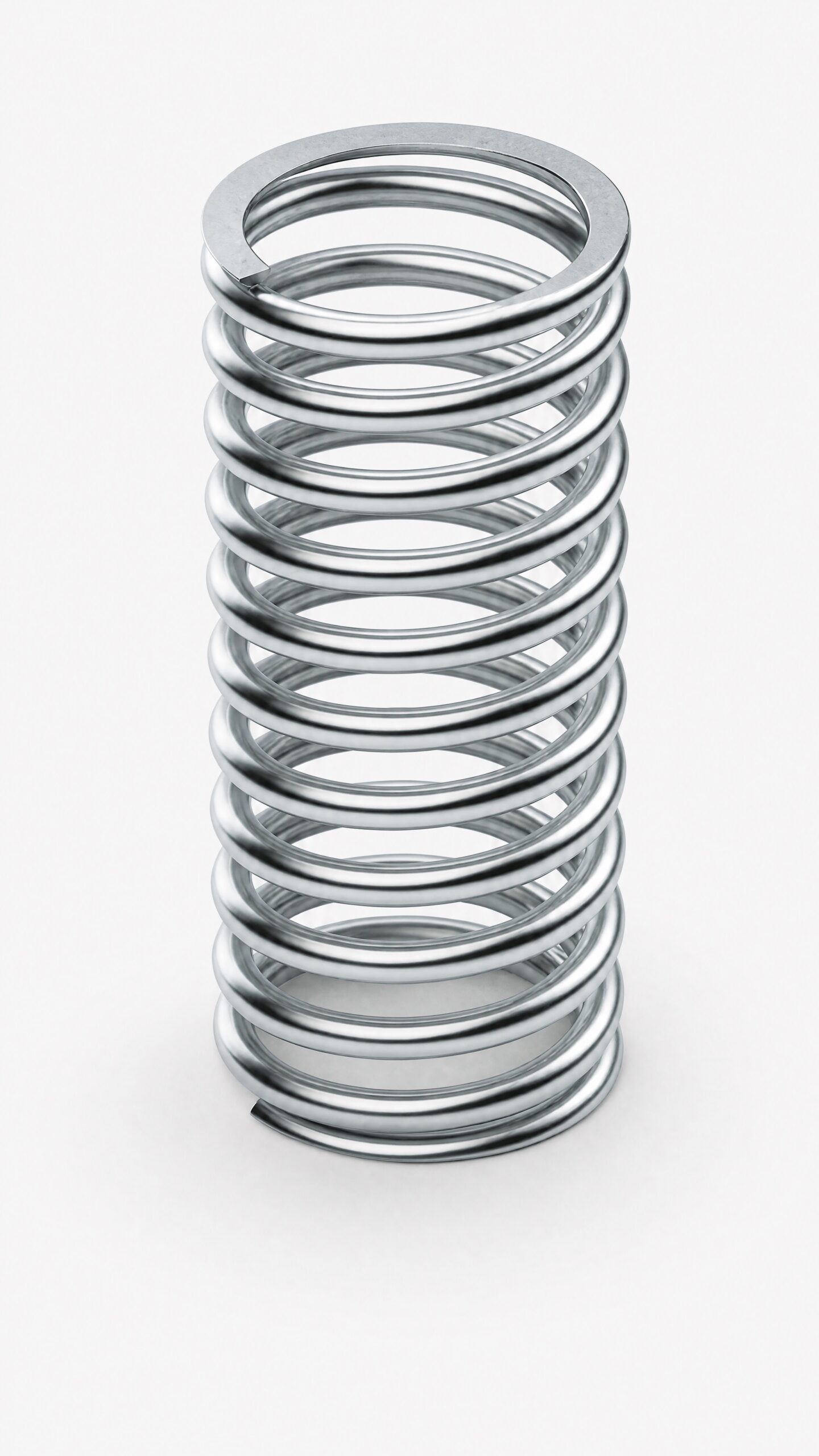
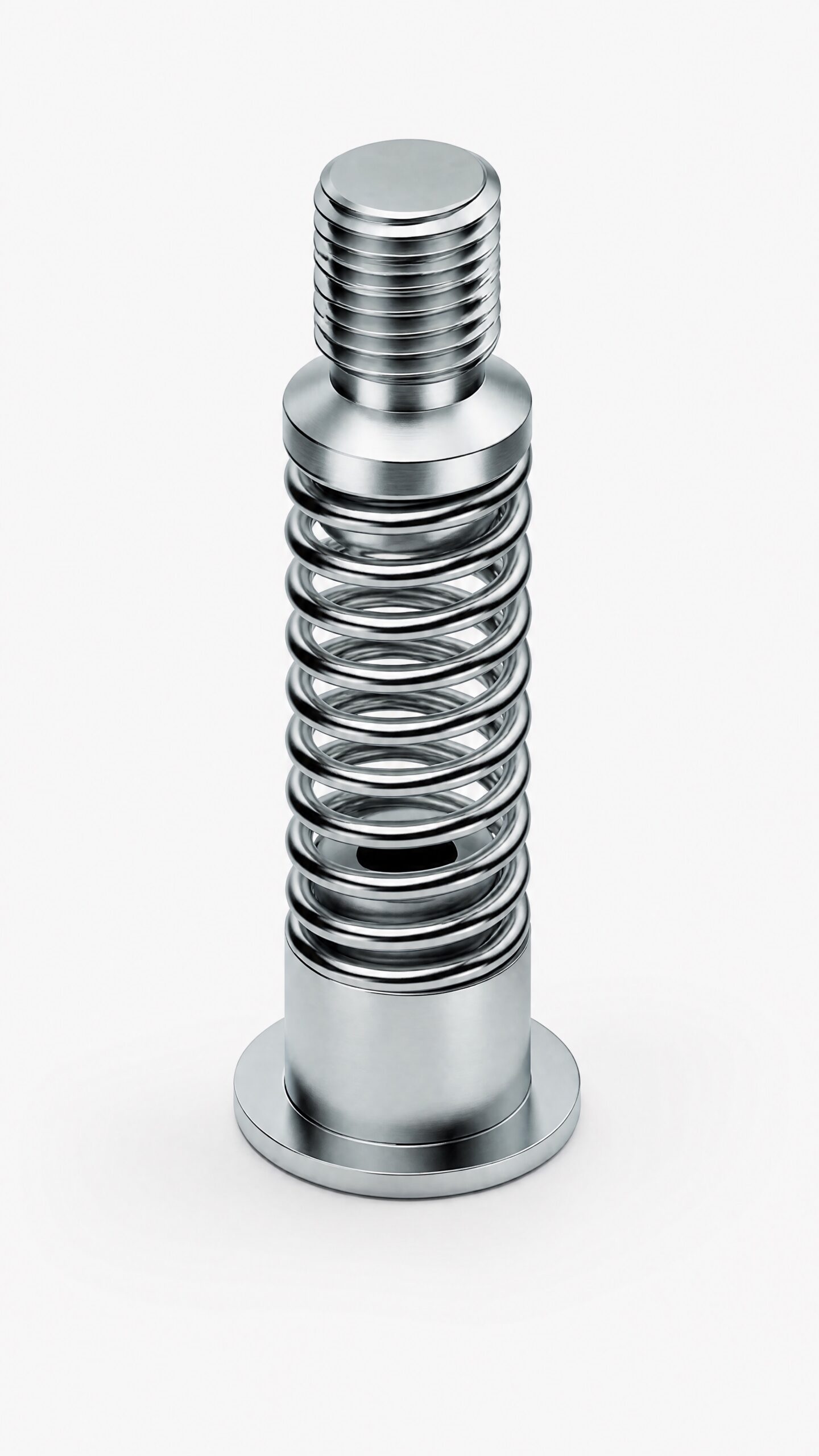
Compression spring with three components
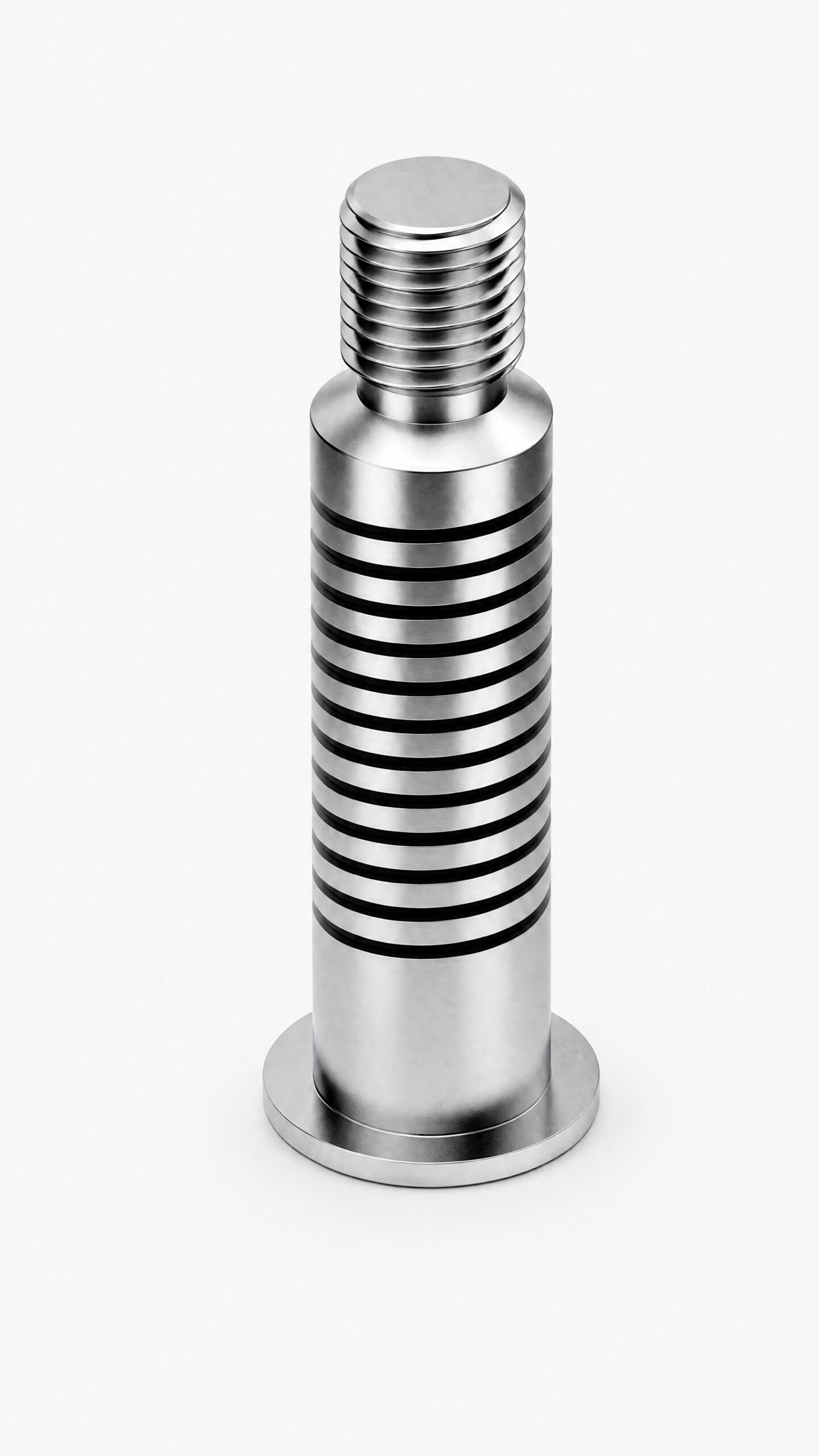
Machined spring with one component